

Choosing a sock with grip is no longer just a trend for studio enthusiasts; it is a critical safety and performance decision. According to the National Safety Council, more than 8.8 million people were treated in emergency rooms for fall-related injuries in 2023 alone. In high-stakes environments like hospitals or slick-floored fitness studios, the simple addition of traction can be the difference between a successful session and a dangerous slip. The global performance grip socks market was valued at $1.3 billion in 2023 and is projected to reach $1.7 billion by 2028, growing at a CAGR of 6.2%. Growth is driven by the rise of Pilates/yoga, increasing athletic participation, and required studio safety standards. Key competitors include Nike, Adidas, TRUSOX, and LUX. As the global performance grip sock market is projected to reach $1.7 billion by 2028, it’s clear that both athletes and everyday users are recognizing the vital importance of "staying grounded."

What are Sock with Grip
A sock with grip is a specialized piece of footwear designed to provide traction on smooth surfaces where traditional socks would typically slide.
The Anatomy of the Grip
These socks are characterized by "treads" or patterns on the sole made from high-friction materials like silicone, rubber, or PVC. These patterns are strategically placed at the pressure points of the foot—the heel and the ball—to ensure maximum contact with the floor. Unlike the thin, disposable versions often found in hospitals, high-performance versions use durable, medical-grade silicone that maintains its "stickiness" even after dozens of washes.
Material Composition
Beyond the grips themselves, these socks are often crafted from high-quality cotton blends or moisture-wicking synthetic fibers. This ensures that while the bottom of the foot is locked in place, the rest of the foot stays cool, dry, and comfortable. Many modern designs also include arch compression bands to keep the sock from twisting during movement.

What do Sock with Grip do?
The primary function of a sock with grip is to provide a stable foundation, but their benefits extend into several areas of physical health.
Slip Prevention and Safety
On surfaces like hardwood, tile, or polished concrete, standard socks act like miniature skates. Grip socks create immediate friction, allowing the wearer to walk, run, or transition between poses without the fear of their feet sliding out from under them. This is especially vital for seniors or those recovering from injury.
Enhanced Proprioception and Balance
By providing a secure connection to the floor, these socks help the brain better understand the body's position in space—a concept known as proprioception. When you aren't worried about slipping, your muscles can engage more effectively, leading to better balance and a more controlled range of motion.

Do you need Sock with Grip
While anyone can benefit from extra traction, certain lifestyles and activities make these socks an absolute necessity.
For the Studio Athlete
If you practice Pilates, Yoga, or Barre, grip socks are often mandatory. They allow you to hold challenging poses—like a plank on a Reformer or a Warrior II on a mat—without your feet drifting. They also serve as a hygienic barrier between your skin and shared equipment.
For Home Safety and Recovery
If your home has slippery stairs or hardwood floors, wearing grip socks is a simple way to "fall-proof" your daily life. They are also excellent for post-operative patients who need to walk as part of their recovery but may have compromised balance or strength.
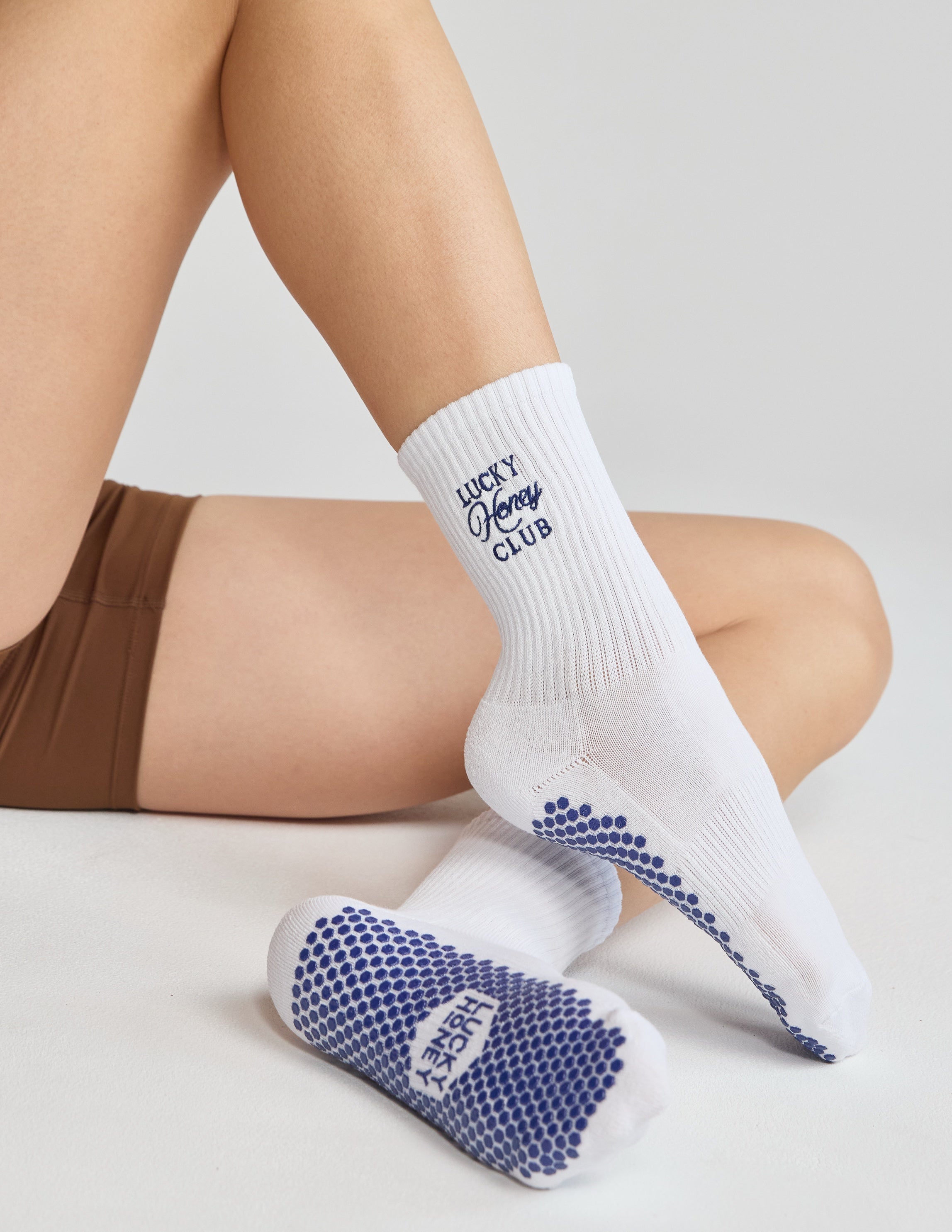
Popular styles of Sock with Grip
Grip socks have evolved into a major category of athleisure, with styles suited for every aesthetic and functional need.
Low-Cut and No-Show Styles
These are perfect for those who want a minimalist look. They sit below the ankle and are popular for Pilates because they provide maximum ankle mobility while still offering full-sole traction.
Crew and Mid-Calf Styles
Often used by soccer players and runners, these longer socks provide extra compression for the calves and prevent the foot from sliding inside a shoe. They offer a "locked-in" feel that is essential for high-intensity sports.
Toeless and Open-Top Designs
Toeless grip socks allow for a "barefoot" feel, letting the toes splay naturally for better balance. Open-top designs provide extra breathability, making them a favorite for hot yoga sessions.

What are best Sock with Grip
In 2026, the market is filled with options, but a few brands stand out for their commitment to quality and innovation.
Grip and Flow Socks: The Professional's Choice
For those seeking the ultimate balance of style and stability, Grip and Flow Socks are the premier choice. Known for their high-density silicone patterns and ergonomic fit, these socks are designed specifically to handle the dynamic movements of a reformer Pilates class or a high-intensity barre session. Their fabrics are exceptionally breathable, ensuring that "Grip and Flow" is exactly what you experience—never slipping, always moving with intention.
Notable US Competitors
Other top-tier brands include Bombas, which is famous for its "honeycomb" arch support and philanthropic mission, and Pointe Studio, which offers some of the most fashion-forward designs in the industry. Sticky Be Socks is another great option, known for their inspirational messages woven into the grip patterns.
How to wash Sock with Grip
To keep the silicone treads effective, you must wash these socks with a bit more care than your standard laundry.
Turn Them Inside Out
Always flip your socks inside out before tossing them in the wash. This protects the silicone grips from rubbing against other clothes or the agitator of the machine, which can cause them to peel over time.
Use Cold Water and Gentle Cycles
High heat can degrade the elasticity of the sock and the bond of the silicone. Use cold or lukewarm water and a gentle detergent. Avoid using fabric softeners, as they leave a coating on the grips that makes them less "sticky."
Can you put Sock with Grip in the dryer?
Technically you can, but it isn't the best practice for longevity.
The Risks of High Heat
The intense heat of a dryer can cause the rubber or silicone grips to become brittle or even melt and stick to other clothes. Over time, frequent drying will cause the grips to crack and lose their traction.
The Best Alternative: Air Drying
To maximize the life of your sock with grip, lay them flat to air dry. Because most high-performance brands use quick-drying synthetic blends, they usually dry within a few hours.
Where to Buy Sock with Grip?
You can find these socks in a variety of retail environments depending on your specific needs.
Specialty Fitness Boutiques
Most Pilates and Yoga studios carry a curated selection of brands like Grip and Flow Socks. Buying in-studio allows you to feel the fabric and ensure the grip pattern is substantial enough for your practice.
Online Marketplaces and Brand Sites
For the widest selection of colors and sizes, buying directly from brand websites is usually best. Large retailers like Amazon and REI also carry reputable brands, but always check the reviews to ensure the "grip" isn't just painted on.
Can you wear grip socks with shoes
Yes! In fact, many professional athletes do this to improve their performance.
Reducing Internal Slippage
Standard socks often slide around inside sneakers or cleats, leading to lost power and unstable footing. Wearing a grip sock inside your shoe "locks" your foot to the insole, providing much better control during quick directional changes.
Do grip socks help with blisters
Surprisingly, they are one of the best tools for blister prevention.
Friction Management
Blisters are caused by the friction of your skin rubbing against your sock or shoe. Because grip socks prevent your foot from sliding, they significantly reduce that friction. By staying in one place, the fabric doesn't bunch up or chafe, keeping your skin intact.
What are socks with grips called
Depending on who you ask, these socks go by several different names.
Common Industry Terms
You will see them listed as non-slip socks, traction socks, anti-skid socks, or sticky socks. In medical settings, they are almost exclusively called fall-prevention socks, whereas in the fitness world, they are usually referred to as yoga or Pilates socks.
What do grip socks help with
Beyond the obvious benefit of safety, grip socks solve several functional problems.
Hygiene and Floor Protection
Walking barefoot in public spaces exposes you to bacteria and fungi. Grip socks provide a barrier while giving you the same "grounded" feel as being barefoot. They also protect expensive hardwood floors from the oils and sweat naturally produced by your feet.
Where to buy socks with grips on the bottom
If you are looking for a reliable pair, focus on "performance" retailers rather than general department stores.
Department Stores vs. Athletic Brands
While stores like Target or Walmart carry basic non-slip socks, they are often designed for lounging. For a "high-performance" feel, stick to athletic brands like Grip and Flow or specialized fitness retailers to ensure the grips won't wear off after a single use.
Conclusion: Get a Grip on Your Performance
Investing in a high-quality sock with grip is a small change that yields massive results in safety, confidence, and athletic form. Whether you are looking to prevent a fall at home or trying to master a difficult sequence on the Pilates reformer, the right traction is your most important piece of equipment. By choosing durable materials and caring for them properly, you ensure a stable foundation for years to come.
Ready to step up your game?
Check out the latest high-traction designs at Grip and Flow Socks and experience the difference that a professional-grade grip can make!


